Help Pets Stay Calm During Vacuuming: Training Steps
Helping Pets Handle Vacuum Stress: A Calm, Step-by-Step Plan for Dogs and Cats
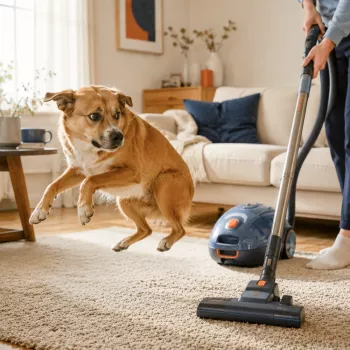
Vacuum noise, sudden movement, and unpredictable starts can trigger fear responses in many pets—barking, hiding, shaking, lunging, or even defensive nipping. A practical plan blends smart management (so your home still gets cleaned), gradual sound-and-sight training, and rewards for calm behavior so your dog or cat learns the vacuum is safe and predictable.
Why vacuums feel scary to pets
Most pets aren’t “being dramatic”—their nervous systems are reacting to a combination of sensory triggers and learned associations.
- Noise intensity: Loud, low-frequency sound can be uncomfortable for sensitive ears, especially in small rooms and on hard floors.
- Fast movement: Rolling motion plus sudden direction changes can look like a “chasing” threat.
- Extra sensory surprises: Static, airflow, and debris movement can be visually startling (often for cats and herding breeds).
- Conditioned fear: If “vacuum turns on” has repeatedly been followed by panic, avoidance becomes a habit that strengthens over time.
- Stress signals: Lip licking, yawning, tucked tail, whale eye, crouching, hiding, pacing, barking, growling, swatting, or refusing food.
For a deeper look at fear, anxiety, and stress in pets, guidance from the ASPCA can help you recognize early warning signs before they escalate.
Set up a low-stress cleaning routine (before training starts)
Before you “train,” prevent your pet from practicing panic. Management keeps everyone safe and protects your progress.
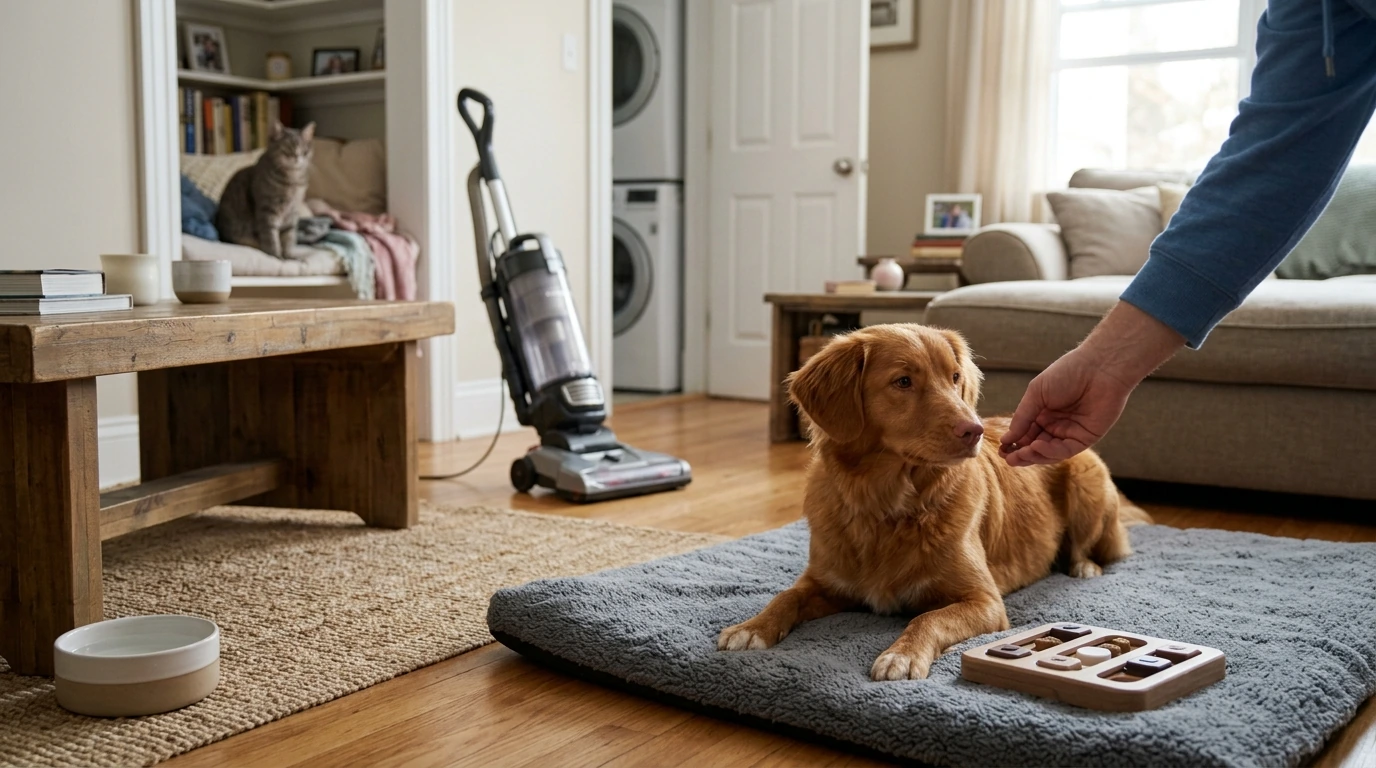
- Create a safe zone: Use a room or crate with a closed door, water, white noise, and a chew or food puzzle. Practice using it on non-vacuum days so it feels normal.
- Stop rehearsal of fear: If your pet reacts strongly, separate them from the vacuum area during cleaning until training is underway.
- Keep cleaning sessions small: Vacuum one room at a time, keep sessions short, and avoid vacuum paths that “follow” your pet.
- Reduce intensity: Use lower power settings (if available), quieter attachments, and vacuum after your pet has exercised and eaten.
- Reserve special rewards: Use high-value treats, a lick mat, a stuffed Kong, or a cat treat scatter delivered away from the machine.
If you want a printable, step-by-step plan you can stick on the fridge, the Helping Pets Handle Vacuum Stress guide breaks the process into small sessions with clear pacing rules.
A gradual plan: teach calm around the vacuum
The goal is desensitization (slowly making the vacuum less intense) plus counterconditioning (pairing the vacuum with something your pet loves). Humane training guidance consistently supports reward-based methods for fear-related behavior; see the American Veterinary Society of Animal Behavior (AVSAB) position statements for context.
Step-by-step progression
| Stage | What the pet can handle | Reward idea | If stress shows up |
|---|---|---|---|
| Vacuum visible (off) | Looks at vacuum and stays loose | Treats for calm glances | Increase distance; shorten session |
| Vacuum moves (off) | Vacuum rolls a few inches without startle | Treat after each small movement | Move slower; fewer repetitions |
| Sound (recording) | Vacuum audio at low volume | Treat scatter/lick mat | Lower volume; increase distance |
| Vacuum on (far) | 1–3 seconds on at a distance | High-value treats in safe zone | Shorter duration; more barriers |
| Vacuum on (nearer) | Normal room vacuuming with calm behavior | Long chew/food puzzle | Return to earlier stage for 2–3 days |
What to avoid (common mistakes that increase fear)
Extra help for specific situations
Puppies and newly adopted pets
Cats
Herding breeds and high-arousal dogs
Noise-sensitive pets
Layer sound buffering (white noise, fans) and consider vet-approved calming aids if training plateaus. For general behavior problem context and when to involve your veterinarian, the Merck Veterinary Manual offers helpful overviews.
If there’s an aggression risk
A ready-made routine to follow during cleaning days
When a structured guide can help
For households building a pet-friendly home routine from day one—especially after adoption—the Are You Ready? Pet Adoption Decision Workbook can help you plan environment setup, schedules, and expectations that reduce stress triggers early.
Before choosing, compare the product details with your daily routine, available space, care needs, and preferred setup. The strongest option is usually the one that fits the intended use clearly and remains simple to clean, store, and check before repeat use.
FAQ
How long does it take for a pet to stop being afraid of the vacuum?
Many pets improve in days to a few weeks with consistent, below-threshold sessions, but severe fear can take longer. Progress depends on how intense the fear is, how predictable your routine is, and whether you avoid overwhelming exposures; if stress shows up, back up a step for a few sessions.
Should treats be given while the vacuum is on?
Yes—if your pet is still calm enough to eat, because the treat helps change the emotional response while the sound/movement is present. A safe-zone setup with a lick mat or long-lasting food item often works best so your pet can stay relaxed rather than hovering near the vacuum.
What if my dog tries to attack the vacuum?
Immediately switch to management: separate your dog with a gate or door, and don’t punish or confront the behavior. Rebuild training at a greater distance with the vacuum off, then progress slowly; if there’s any risk of a bite, work with a qualified trainer or behaviorist.









Leave a comment